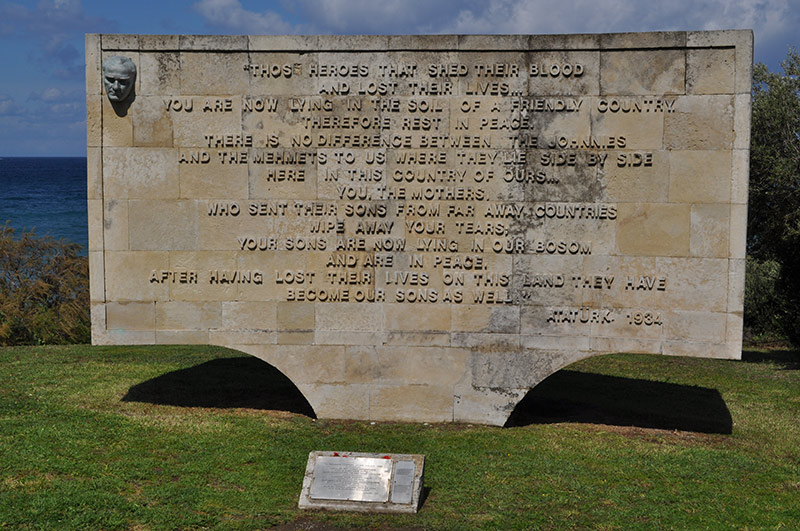
Gallipoli is the name given to the Allied Campaign on the peninsula during World War I, usually known in Britain as the Dardanelles Campaign and in Turkey as the Battle of Çanakkale. It was an Allied attempt to push through the Dardanelles and capture Constantinople (now Istanbul). On April 25, 1915, as part of an allied force of British and French troops, Australian and New Zealand Army Corps (ANZAC) landed at a small bay at the western end of the Peninsula (today officially called Anzac Cove). The campaign was largely successful for the Turks and the Germans and a catastrophe for Russia which eventually would lead to civil war partly due to this unsuccessful campaign.

ANZAC forces evacuated on December 19, 1915 and the other elements of the invasion force a little later. There were around 180,000 Allied casualties and 220,000 Turkish casualties. This campaign has become a "founding myth" for both Australia and New Zealand, and Anzac Day is still commemorated as a holiday in both countries. In fact, it is one of those rare battles that both sides seem to remember fondly, as the Turks consider it a great turning point for their (future) nation as well.